
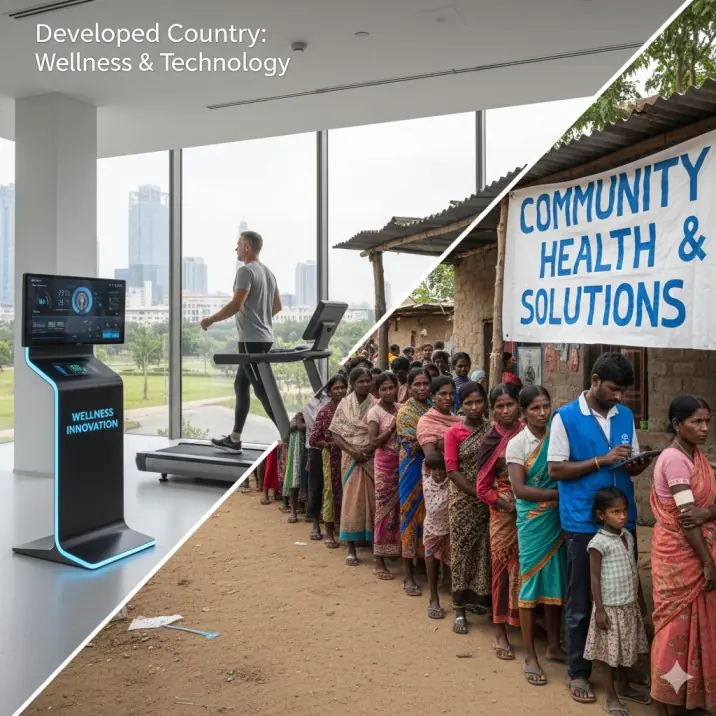
Healthcare systems are often judged by their promises: universal coverage, financial protection, and standardised care. These promises appear reassuring, especially when people are healthy. Preventive services, vaccinations, and routine check-ups function smoothly. The system feels dependable.
But the true test of any healthcare system begins when people fall ill.
When illness becomes urgent, healthcare is no longer about policy; it is about response. This is where innovation matters most: the ability of a system to adapt, respond, and redesign itself around human need.
In many developed healthcare systems, access is governed by pathways, referrals, and waiting lists. These structures were created to ensure safety, fairness, and cost control. Over time, however, they have also reduced flexibility. Innovation becomes focused on optimization of processes rather than transformation of care. The system works efficiently for predictable needs. It struggles when confronted with suffering that does not fit neatly into schedules.
Innovation in such systems often takes the form of digital records, scheduling tools, and compliance mechanisms. These are important, but they do not address the core problem of responsiveness. A system can be technologically advanced and still clinically slow.
In contrast, healthcare systems like India’s appear disordered and overstretched, yet they continuously improvise. Hospitals absorb enormous patient volumes through human ingenuity; rapid triage, flexible decision-making, and informal coordination. Innovation here is not always high-tech; it is adaptive.
Indian healthcare innovates by necessity. New care pathways emerge organically. Low-cost diagnostics, frugal devices, and task-shifting are born from constraints. The system evolves in response to demand rather than design. The paradox is that systems which appear stable may innovate less in patient experience, while systems that appear chaotic innovate constantly just to survive.
A healthcare system that works best when people do not need it is a system whose innovation is oriented toward administration, not suffering. True healthcare innovation must begin where illness disrupts life—not where it fits into schedules.
Innovation should not only make systems efficient.
It should make them humane, responsive, and adaptable.
#HealthcareInnovation #HealthSystems #PatientExperience #MedicalDesign #SystemThinking #FutureOfHealthcare #HumanCenteredCare