
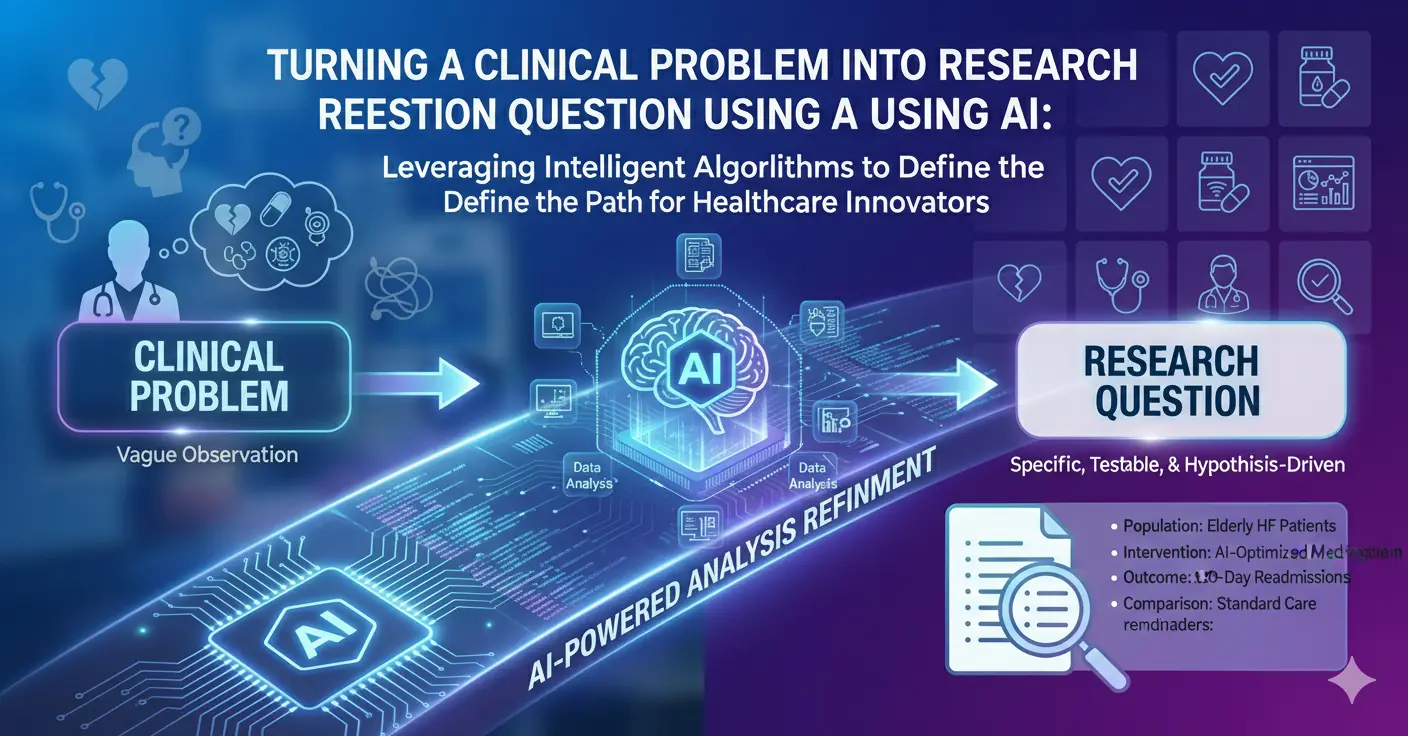
Identifying a problem is powerful. But unless that problem is converted into a structured research question, it remains an idea. Many clinicians struggle at this…
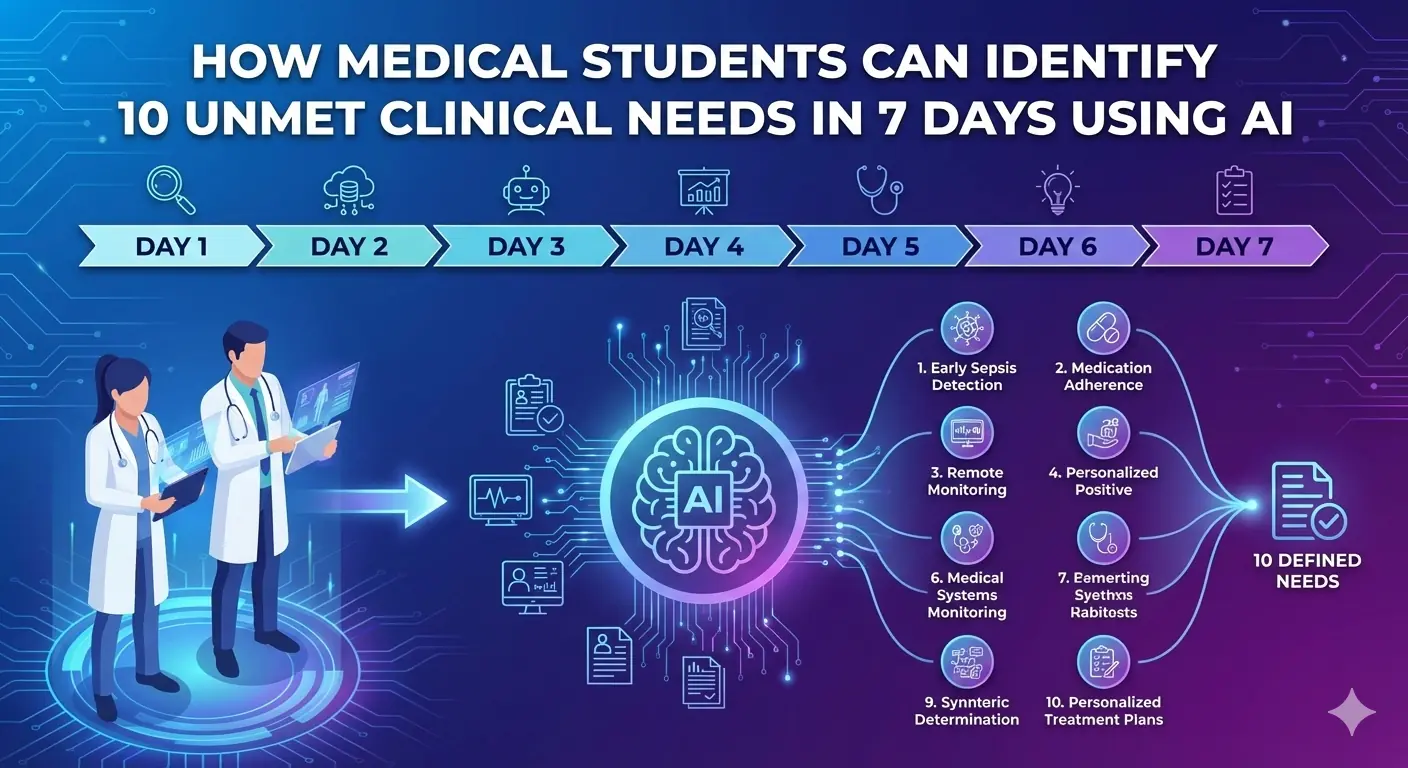
Medical students often believe innovation is reserved for senior doctors, researchers, or engineers. In reality, students are uniquely positioned to identify unmet clinical needs because…
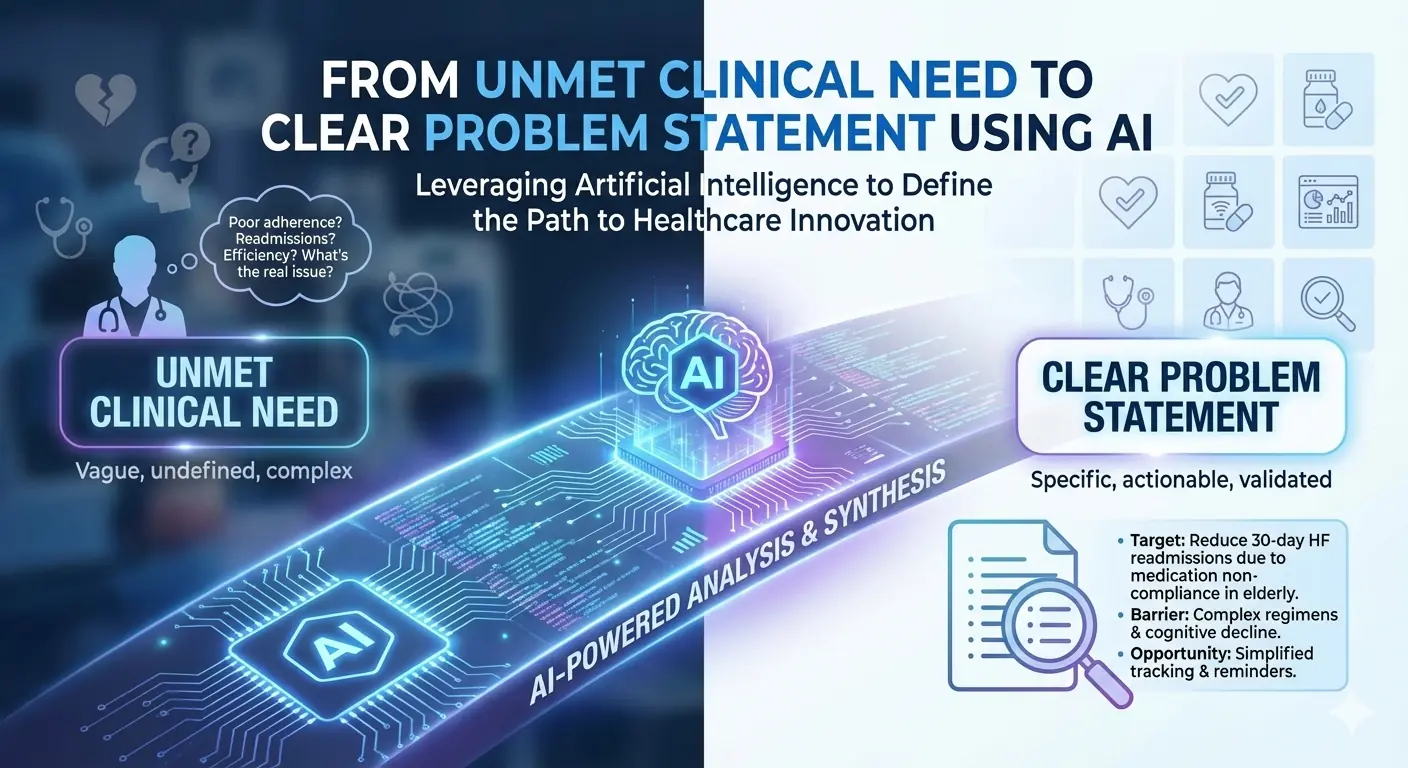
Identifying an unmet clinical need is only the beginning. The real turning point in innovation happens when a vague problem is converted into a clear,…
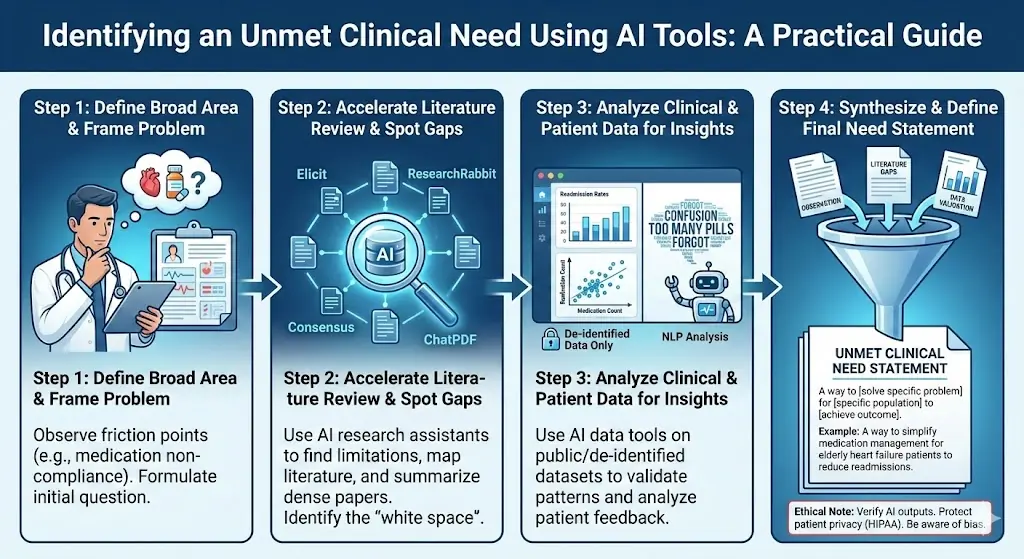
Identifying an unmet clinical need is the first and most critical step in medical innovation. Every day in hospitals, clinicians and students encounter delays, confusion,…
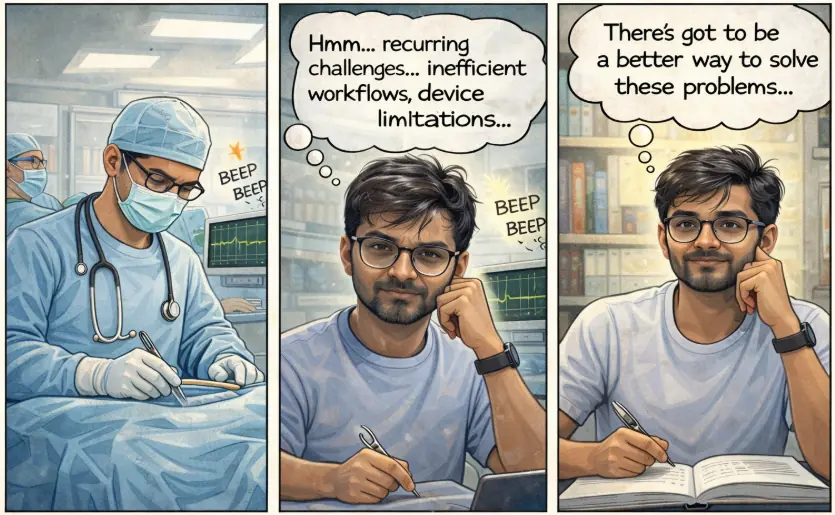
The journey into innovation is rarely linear, especially for clinicians. It often begins not with formal intent, but with curiosity shaped by daily exposure to…
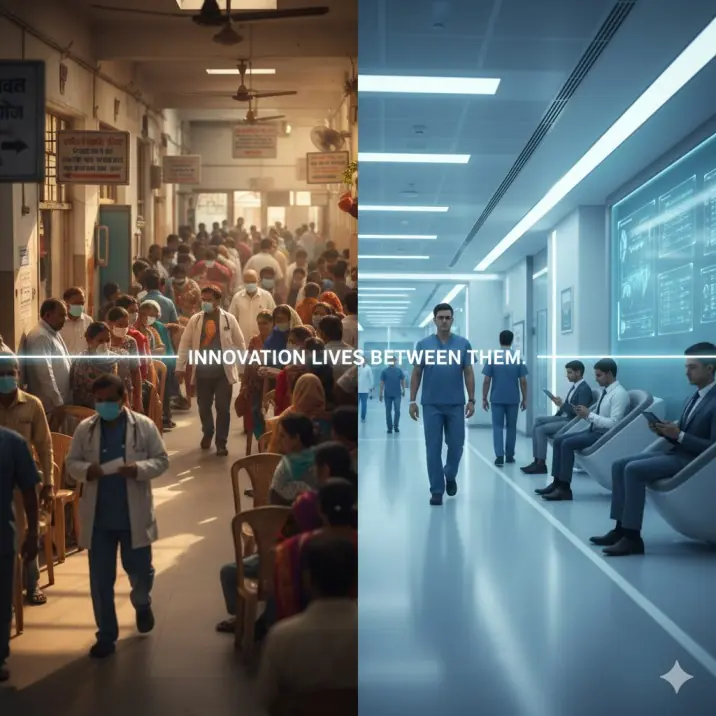
Indian healthcare often looks chaotic. Crowded waiting areas, long queues, hurried consultations, and constant motion give the impression of disorder. The system feels overstretched and…
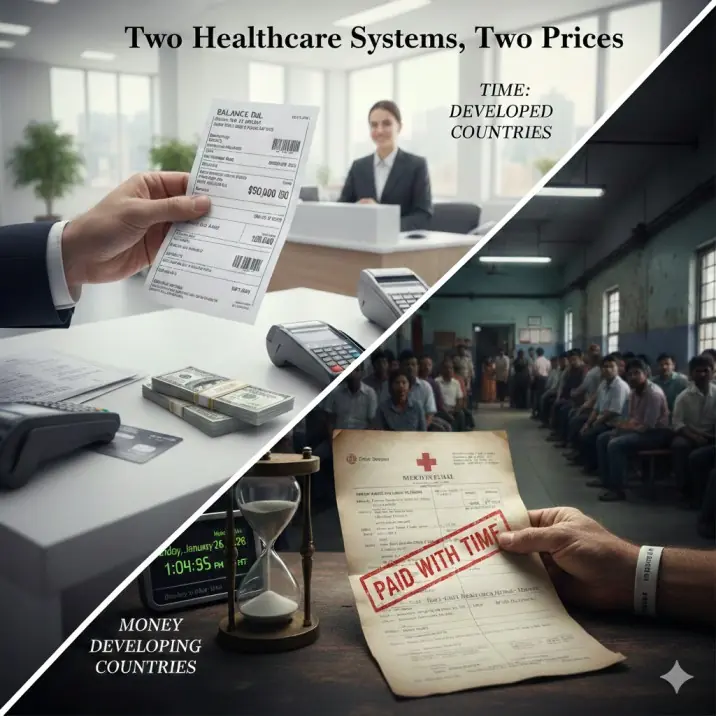
Healthcare costs are usually measured in currency: hospital bills, insurance premiums, and public spending. Yet one of the most expensive costs in modern healthcare is…
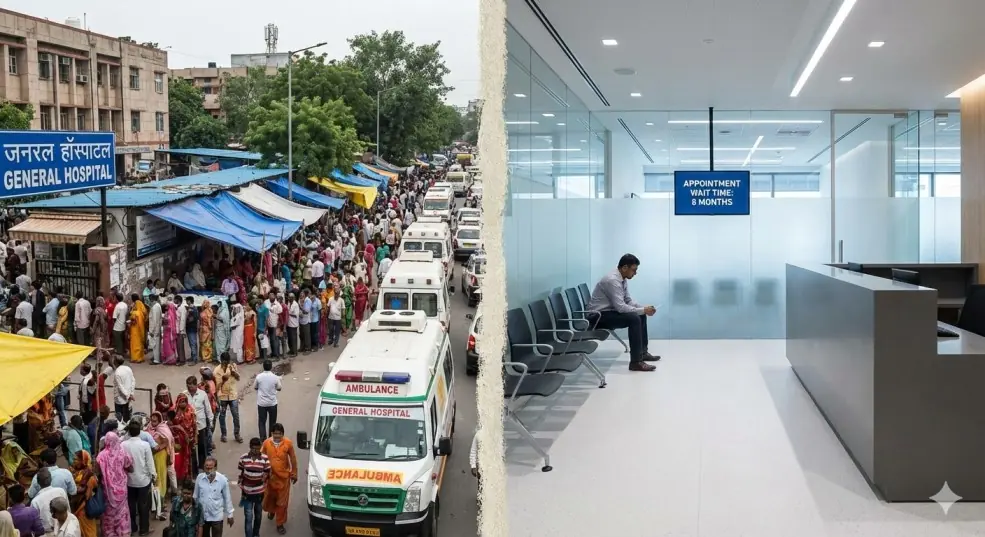
Healthcare systems rarely fail dramatically. They fail quietly through delays, trade-offs, and invisible suffering. When healthcare systems in many developed countries are placed alongside the…
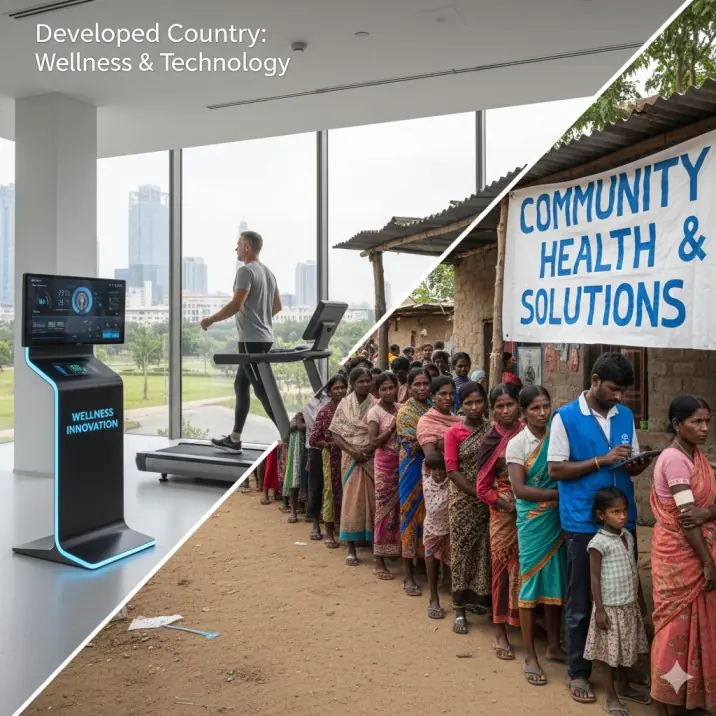
Healthcare systems are often judged by their promises: universal coverage, financial protection, and standardised care. These promises appear reassuring, especially when people are healthy. Preventive…
The path toward innovation is often shaped not by early intention, but by exposure to real-world problems and the environments that encourage questioning and experimentation.…