
The path toward innovation is often shaped not by early intention, but by exposure to real-world problems and the environments that encourage questioning and experimentation. This narrative reflects the journey of Shravani Desai, our Junior Innovation Mentor, a Biomedical Engineering graduate, and her transition from a research-oriented academic mindset to active engagement within the healthcare innovation ecosystem at the Medical Innovation Creativity & Entrepreneurship (M.I.C.E) Labs.
Beginning with Research, Not Innovation
During my early academic years, my interests were primarily aligned with research and structured learning. Innovation, as a domain, felt distant and undefined. The conventional academic framework offered clarity, but provided limited opportunities to engage with real-world healthcare challenges. Over time, this gap became increasingly evident, as theoretical learning began to feel disconnected from practical impact.
Exposure Through Medical Device Hackathon (MEDHA) 2024
A significant shift occurred during MEDHA 2024, where I participated as a team member in a healthcare innovation challenge. The event introduced an environment that emphasized implementation, interdisciplinary collaboration, and problem-solving within real clinical contexts. Working alongside Dr. Rishikesh, Dr. Sonya, and product designer Tushana, our team adopted a problem-driven approach rather than a solution-first mindset. Our efforts resulted in second place in the first round, marking an early validation of applied engineering over purely academic outcomes.

The second round of MEDHA, held at IIT Bombay, further reinforced this transition. Immersion in an established innovation ecosystem demonstrated how healthcare needs, design thinking, and engineering constraints intersect in practice. Achieving first place at this stage strongly affirmed for me that innovation could serve as a meaningful and impactful extension of engineering education.
This experience clarified an alternative professional direction one that aligned intellectual rigor with tangible healthcare outcomes.
Entering the M.I.C.E Labs Ecosystem
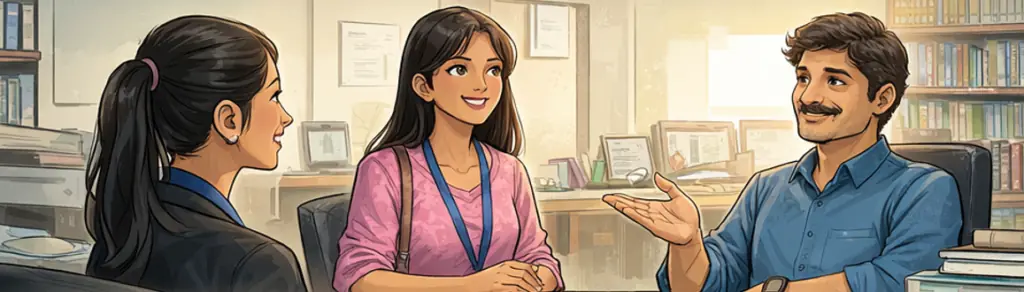
Motivated by these experiences, I chose to pursue innovation more intentionally through M.I.C.E Labs. This transition was supported through the mentorship and guidance of Program Manager and Senior Innovation Mentor, Dr. Zeenal Punamiya, and Dr. Aniruddha Malpani, whose leadership emphasized long-term learning, responsibility, and ecosystem building.
Following my graduation, I formally joined M.I.C.E Labs, transitioning from episodic participation in innovation events to sustained involvement in healthcare problem-solving.
Learning Within Real-World Constraints
The initial phase at M.I.C.E Labs presented challenges that extended beyond academic preparation. Real-world healthcare problems required engagement with hardware systems, clinical workflows, regulatory considerations, and operational constraints. While my early interests leaned toward software-based solutions, the ecosystem encouraged me to expand beyond established comfort zones. This environment fostered experiential learning, where failure, iteration, and cross-disciplinary collaboration became integral to the innovation process.
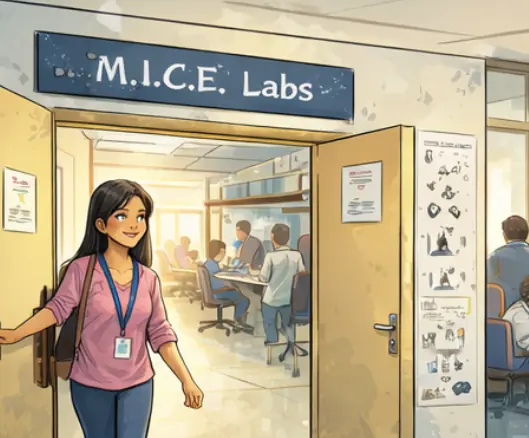
After eight months within the M.I.C.E Labs ecosystem, my journey continues to evolve. The focus has shifted from adapting to the ecosystem toward contributing meaningfully within it. Continuous learning, critical thinking, and empathy-driven design now define my approach to healthcare innovation.
Rather than a definitive destination, innovation has become an ongoing process; shaped by mentorship, exposure, and sustained engagement with real clinical realities.
Looking Ahead
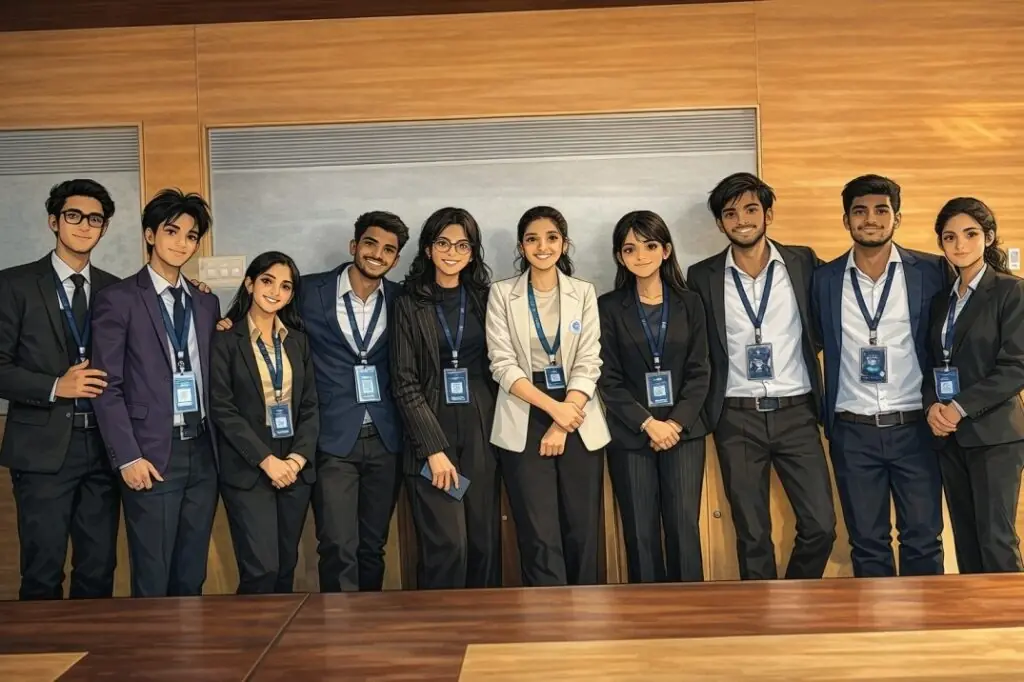
My experience underscores the role of structured innovation ecosystems in shaping future healthcare innovators. For individuals who enter without a predefined innovation mindset, environments like M.I.C.E Labs provide the foundation to grow, adapt, and contribute responsibly.
This journey remains open-ended, driven by curiosity, accountability, and a commitment to building solutions that matter within healthcare systems.
#Innovation #HealthcareInnovation #MedicalInnovation #MICE Labs #InnovationEcosystem #WomenInSTEM #BiomedicalEngineering #DesignThinking #ClinicalInnovation #StudentInnovation #Mentorship #AppliedResearch