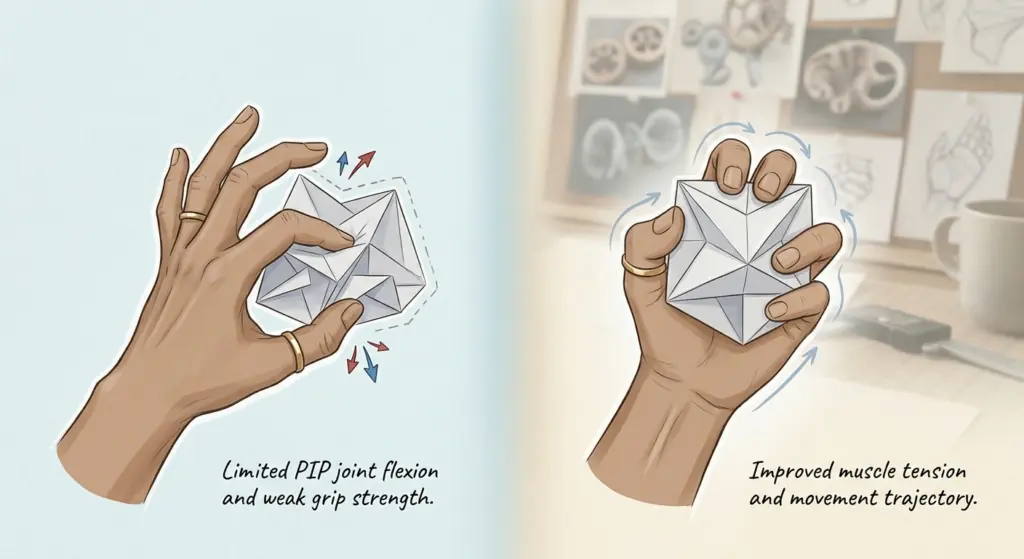
In healthcare design, solutions rarely begin with technology. They begin with observation.
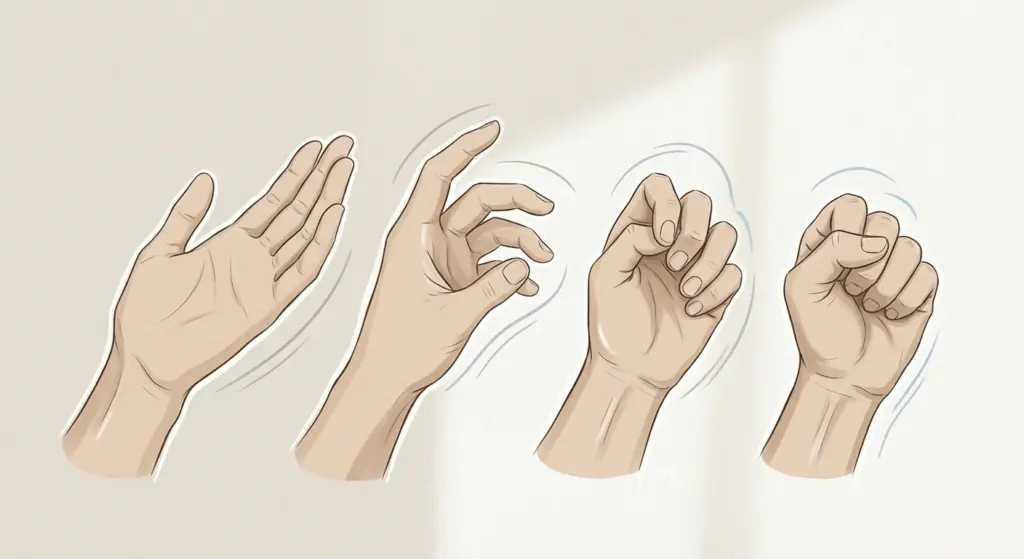
A simple movement like closing your hand into a fist is something most of us don’t think twice about. It’s part of how we interact with the world. We use it to hold, carry, grip, and perform everyday tasks. But when that movement becomes limited, the impact is immediate.
Through observing challenges in hand movement, it becomes clear that even small physical limitations can disrupt daily routines. Tasks that once felt effortless begin to require conscious effort, adaptation, or assistance. This is where design begins, not with a product, but with a question. What exactly is missing in this movement?
Instead of jumping directly to solutions, the focus shifts to understanding: How fingers naturally bend and coordinate, What prevents a complete grip, How much support is needed vs how much freedom should remain.
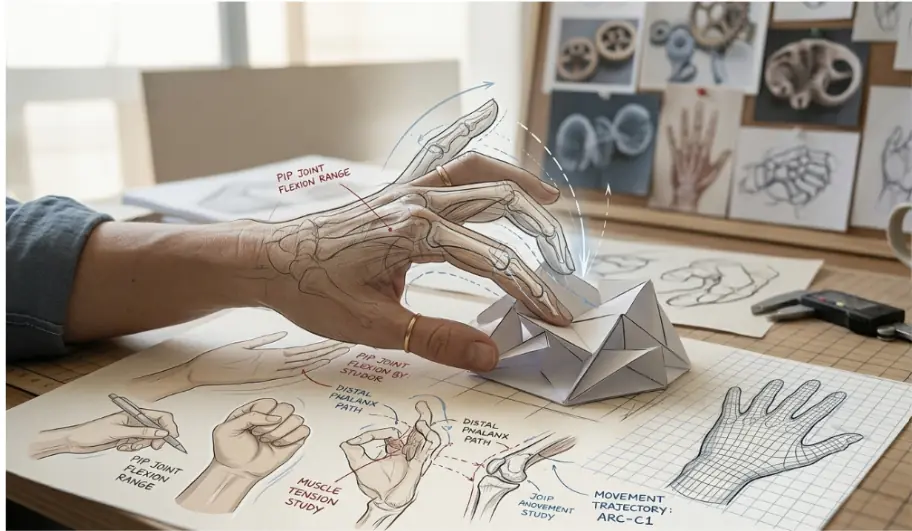
Designing for the human body is not just about adding support it’s about respecting natural motion. This insight changes the approach. Rather than creating rigid devices, assistive design starts to explore guiding movement instead of controlling it. The goal becomes subtle: support the hand just enough to help it function better, without restricting it further.
At this stage, tools like rapid prototyping and 3D printing become valuable not just for making products, but for thinking through design. They allow ideas to be tested, refined, and adapted quickly based on real interaction. But the real shift is not technological. It is a shift in perspective from designing for a problem to designing with an understanding of human movement. Because in the end, assistive design is not just about devices. It is about enabling people to return to the small, everyday actions that define independence. And sometimes, solving a complex problem begins with something very simple: paying attention to a movement we usually take for granted.