
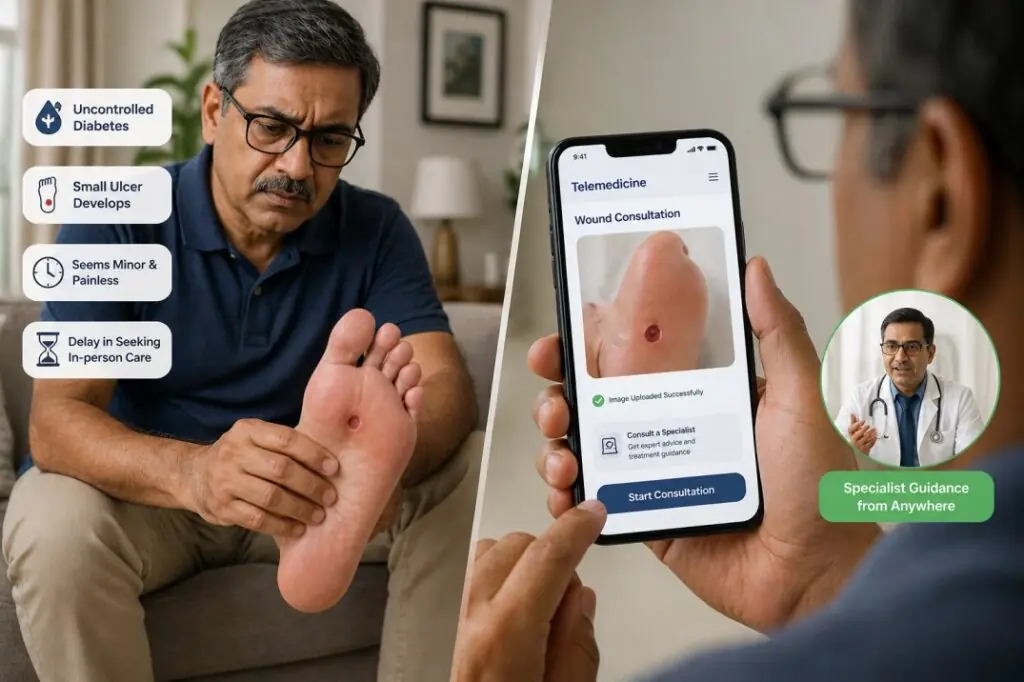
Diabetic Foot Ulcers (DFUs) remain one of the leading causes of hospitalization among individuals living with diabetes. Despite being largely preventable, these conditions often escalate due to delayed diagnosis and inconsistent monitoring. Early detection, combined with continuous care, plays a critical role in preventing complications and improving patient outcomes. This case highlights how timely remote intervention can make a significant difference.
Case Overview
A 52-year-old patient with a long history of uncontrolled diabetes noticed a small ulcer developing on his foot. Initially, the wound seemed minor and painless, leading to a delay in seeking in-person medical attention. However, instead of waiting for the condition to worsen, the patient turned to a telemedicine platform for guidance.
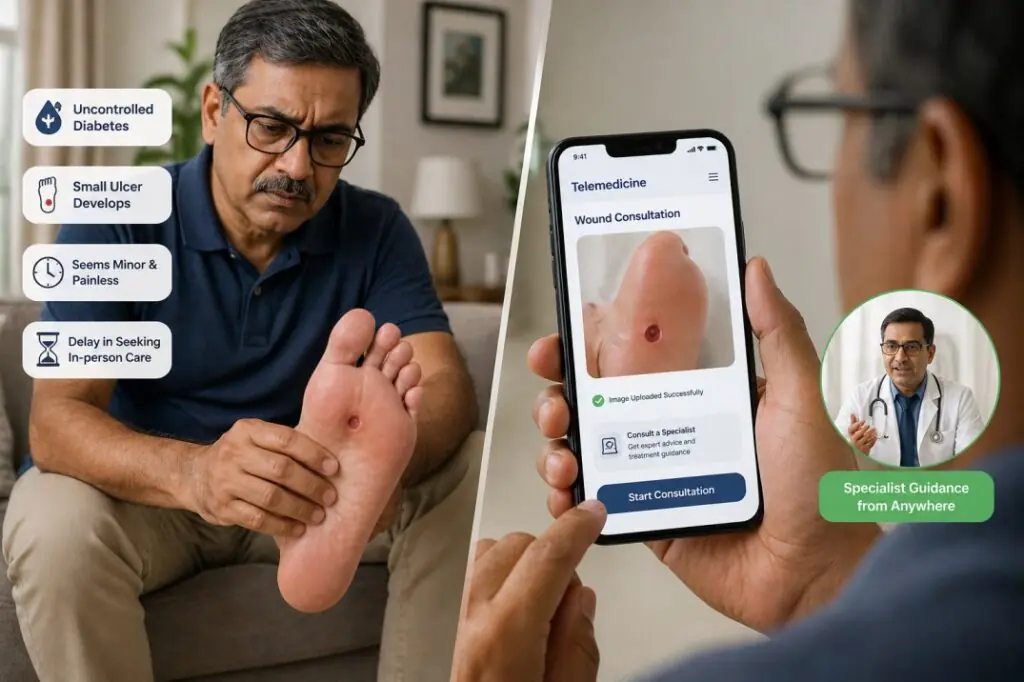
Using the platform, the patient began uploading daily images of the wound and received prompt feedback from a medical professional. This immediate access to care helped bridge the gap between symptom onset and treatment.
Challenges
The patient faced several common barriers: Limited access to specialized care in his local area, Low awareness regarding the seriousness of foot ulcers, High risk of infection due to delayed intervention
These challenges often contribute to complications in similar cases, especially in underserved or remote settings.
Intervention
Through consistent remote monitoring and scheduled virtual consultations, the care team was able to: Closely track the progression of the wound, Modify treatment plans in real time based on visual updates, Reinforce medication adherence and wound care practices
This proactive approach ensured that any signs of deterioration were addressed immediately.
Outcome
Within four weeks, the patient’s wound showed significant improvement, with no signs of infection or further complications. Most importantly, the patient avoided hospitalization and the risk of surgical intervention.
Key Takeaway
This case demonstrates that early digital intervention can dramatically reduce the severity of diabetic foot complications. When patients are empowered with accessible tools and timely medical support, outcomes improve substantially.
Conclusion
Telemedicine is transforming the way chronic conditions like DFUs are managed. By enabling continuous, proactive care, it shifts treatment from reactive emergency response to early intervention—ultimately saving limbs, reducing costs, and improving quality of life.
#DigitalHealth #Diabetes #Telehealth #Teleconsultation #DiabeticFootUlcer #MedTech #Medical #Engineering #Design #Interdisciplinary #Remote #Intervention